The 2026 pivot from fragmented chains
For years, Web3 wallets have functioned less like financial tools and more like technical gatekeepers. Users must manually select networks, bridge assets across disjointed protocols, and manage gas tokens that vary by chain. This fragmentation has created a high-friction environment where the complexity of the underlying infrastructure is exposed directly to the end user. The result is a retention problem: if the experience feels like debugging code, most people simply leave.
Fred Wilson, a prominent venture capitalist and early Coinbase investor, has identified 2026 as the year this dynamic shifts. In recent analysis, Wilson predicts a decisive pivot toward user-friendly abstraction, arguing that the industry’s next growth phase depends on hiding the messy reality of multi-chain architecture. The goal is no longer to showcase decentralization’s complexity, but to deliver a unified experience that feels as simple as a traditional banking app.
This transition marks the end of the "chain-native" era for mainstream adoption. As account abstraction and omnichain standards mature, the wallet’s role is evolving from a key manager to an intelligent interface layer. The market is beginning to reflect this urgency. Below is the current market context for Ethereum, the primary settlement layer driving much of this UX innovation.
How chain abstraction routers work
Chain abstraction routers act as the invisible infrastructure behind unified Web3 wallets. Instead of forcing users to manually select a network, pay gas in a specific token, or initiate separate bridge transactions, the router intercepts the intent and executes it across the necessary chains. This mechanism relies on account abstraction (AA) to bundle these complex operations into a single, user-friendly transaction.
The process begins when a user initiates an action, such as swapping tokens. The router identifies the optimal path, which may involve moving assets from an L2 to an L3 or bridging across distinct ecosystems. It then constructs a meta-transaction that pays for all required gas fees upfront, often using a stablecoin or the user’s native token, regardless of the destination chain. This eliminates the friction of holding multiple native tokens for gas.
By hiding the mechanics of L2/L3 selection and bridging, chain abstraction routers transform Web3 from a multi-step chore into a seamless experience. The user interacts with a single interface, while the router handles the cross-chain logistics in the background. This shift is critical for mainstream adoption, as it removes the technical barriers that have historically limited blockchain usability.
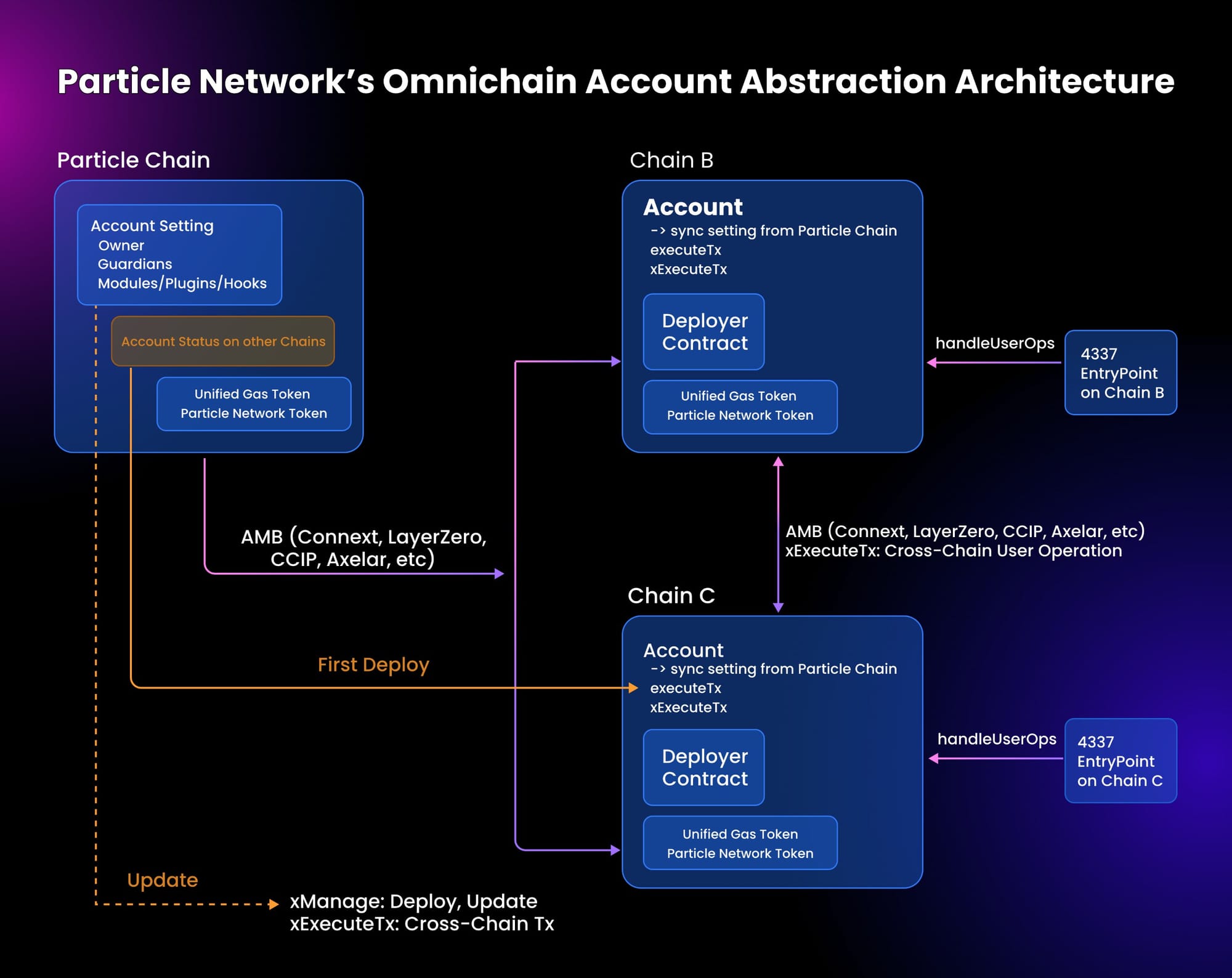
The result is a unified experience where the underlying chain structure becomes irrelevant to the user. They simply get what they want, whether it’s a token swap, a transfer, or a DeFi interaction, without needing to understand the intricacies of cross-chain messaging or liquidity routing.
Web2 interfaces meet Web3 wallets
The friction of cross-chain transactions often stems from the gap between what users expect and what blockchains actually require. In 2026, the standard for unified Web3 wallets is to hide that gap entirely. The goal is a user experience where the interface feels like a familiar Web2 application, while the backend handles the complex, multi-step settlement across different chains.
When a user initiates a transfer, they should see a single confirmation screen, not a series of disconnected approvals for gas tokens, bridge contracts, and network switches. The wallet abstracts the underlying complexity. It manages the liquidity, selects the optimal route, and settles the transaction on the destination chain. The user sees only the result: assets moved from A to B, with a familiar progress indicator.
This abstraction reduces cognitive load and error rates. Traditional multi-step flows require users to understand native gas tokens, bridge risks, and network compatibility. By presenting a unified interface, wallets can significantly lower the barrier to entry. This approach aligns with modern UX best practices, which prioritize clarity and predictability over exposing technical infrastructure.
The contrast between legacy flows and omnichain abstraction is stark. The table below compares the typical user journey in each model.
| Metric | Legacy Multi-Step | Omnichain Abstraction |
|---|---|---|
| User Steps | 3-5 interactions | 1-2 interactions |
| Gas Management | Manual token swapping | Automatic abstraction |
| Failure Rate | High (bridge/nonce errors) | Low (single settlement) |
The result is not just convenience; it is a fundamental shift in how users interact with digital assets. By treating cross-chain transfers as a single atomic event, wallets can finally compete with the seamless experience users have come to expect from traditional fintech apps.
Design patterns for secure abstraction
The promise of omnichain wallets is invisibility: the user shouldn't care which chain they are on. But in 2026, that invisibility has a dark side. When abstraction hides the mechanics of a transaction, it also hides the risks. Designers face a critical tension between simplifying interaction and maintaining transparency.
The cost of hidden friction
Dark patterns in crypto UX are no longer just about tricking users into clicking buttons; they are about obscuring the true cost of capital. In an omnichain environment, where liquidity is pulled from multiple sources, hidden fees can accumulate silently. A wallet that abstracts away gas fees without clearly displaying the slippage or the routing cost is often masking a worse deal. Research into 2026 crypto UX trends shows that deceptive defaults and misleading interfaces remain primary vectors for user loss. When a user cannot see the path their funds take, they cannot evaluate the risk.
Warning: Abstraction should simplify the interface, not the risk. If a design pattern hides the fact that a transaction is cross-chain, it must still clearly display the associated costs and potential failure points. Obscuring these details is a leading cause of user error and financial loss.
Transparency as a feature
Good omnichain UX treats transparency as a core feature, not an afterthought. This means providing clear, real-time visibility into where funds are moving and what fees are being charged. Instead of hiding the complexity, effective designs explain it in plain language. For example, rather than showing a single "Send" button, a well-designed wallet might show a breakdown: "Routing through LayerZero • 0.1% fee • 2 min estimated time."
This approach builds trust. Users are more likely to adopt omnichain tools when they understand the mechanics behind the abstraction. It shifts the dynamic from blind trust to informed participation. As the market matures, the wallets that succeed will be those that respect the user's intelligence, providing the necessary context to make safe decisions without overwhelming them with technical jargon. The goal is not to eliminate complexity, but to manage it responsibly.
Build the omnichain wallet experience
Building an omnichain wallet experience requires shifting from managing isolated chains to orchestrating a unified flow. The goal is to make cross-chain interactions feel as simple as sending a message, removing the friction of manual bridging and gas management. This section outlines the technical foundation for implementing these standards.
Account abstraction (ERC-4337) is the backbone of modern wallet UX. By moving signature validation to the mempool, you enable gasless transactions and social recovery. Users should never see a gas fee prompt for a cross-chain swap; the wallet should sponsor the fee or deduct it from the destination balance. This abstraction hides the complexity of chain-specific transaction formats.
A universal router acts as the central dispatch system for all cross-chain intents. Instead of hardcoding bridge connections, the wallet queries available liquidity pools and bridge protocols in real-time. The router selects the optimal path based on speed, cost, and security, presenting the user with a single "Approve" signature rather than multiple bridge confirmations.
Cross-chain transactions have more failure points than single-chain ones. Implement clear, human-readable error messages that explain why a transaction failed (e.g., "Liquidity insufficient on Layer 2" vs. "Error 0x45"). Provide estimated completion times for each step of the cross-chain journey. Transparency builds trust when the underlying technology is invisible to the user.
By focusing on account abstraction and intelligent routing, you create a wallet that feels like a single entity rather than a collection of chain-specific apps. This approach aligns with the 2026 standard for unified Web3 interfaces, where the user's identity and assets are portable and seamless across the entire ecosystem.
Frequently asked questions about omnichain UX
What is UX in blockchain?
Blockchain adoption often stalls because of poor user experience. Omnichain UX aims to solve this by making cross-chain interactions feel as simple as a standard web transaction. It hides the complexity of bridges and gas tokens behind a single, unified interface, allowing users to focus on their assets rather than the underlying mechanics.
Is UI/UX still in demand in 2026?
The UX job market in 2026 isn't shrinking, it's evolving. Demand is still strong, but roles are more specialised. Designers who combine UX fundamentals with skills like AI literacy and product thinking are standing out, particularly in complex sectors like Web3 where clarity is paramount.
How does omnichain UX improve wallet security?
By abstracting away the need for users to manually select networks or approve multiple transactions, omnichain UX reduces the cognitive load that leads to errors. This streamlined approach minimizes the risk of users sending assets to the wrong chain or falling for phishing scams that exploit confusion over network fees and compatibility.
No comments yet. Be the first to share your thoughts!