

In the multichain era, where Layer 2 and Layer 3 solutions proliferate, achieving seamless cross-chain interactions remains a core challenge for DeFi users and developers. NEAR Intents addresses this through its innovative NEAR Intents layers, focusing on asset settlement and matching to deliver unified UX L2 L3. By leveraging Chain Signatures and a solver network, NEAR Protocol simplifies value transfer across blockchains, AI agents, and even traditional markets. As of the latest data, Binance-Peg NEAR Protocol trades at $1.00, with a 24-hour change of and $0.005720 ( and 0.005750%), reflecting steady market confidence amid growing adoption.
NEAR Intents has processed over $6 billion in total volume by November 2025, with daily activity exceeding $150 million across more than 120 assets. This positions it as a leading cross-chain asset layer, integrating with platforms like SwapKit for AI-powered routing and supporting new assets such as Litecoin. The protocol's strength lies in its three core layers: the Chain Signatures Asset Management Layer, Fast Settlement Layer, and Solver Matching Layer. These components enable efficient omnichain solvers and intents-based execution, abstracting complexities for frictionless chain abstraction routers.
Dissecting the Chain Signatures Asset Management Layer
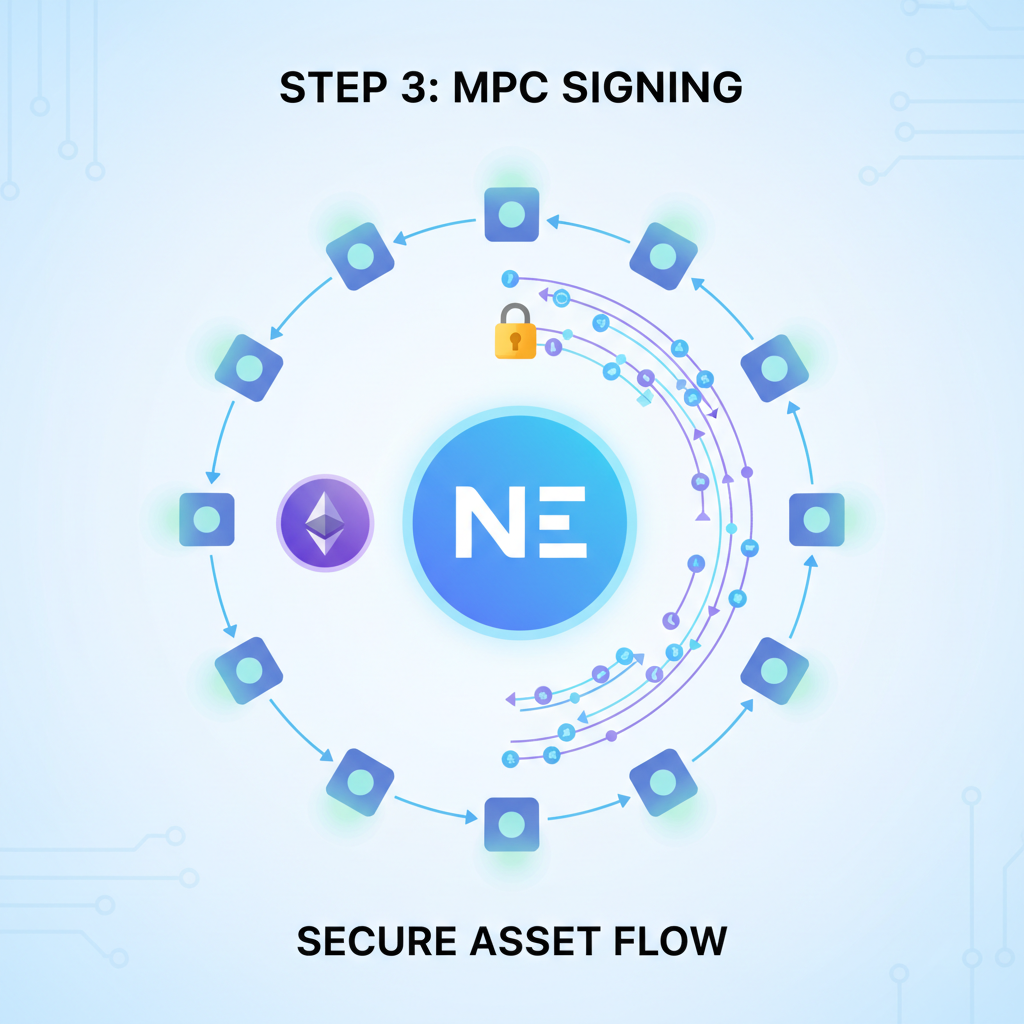
The foundation of NEAR Intents rests on the Chain Signatures Asset Management Layer, powered by NEAR's breakthrough NEAR Chain Signatures technology. This layer allows a single NEAR account to securely sign transactions on other chains without exposing private keys, using Multi-Party Computation (MPC) among NEAR validators. Imagine a user on an Ethereum L2 wanting to swap assets to a Solana L3; instead of bridging manually, they express an intent, and this layer manages asset custody and signing across chains.
Fundamentally, it eliminates custodial risks associated with multisig wallets. Validators co-sign via MPC, providing near-instant finality while maintaining decentralization. For developers building unified UX L2 L3 applications, this layer offers verifiable security: on-chain verifier contracts parse and validate intents before execution. In my analysis, this conservative approach bridges fragmentation in Web3, prioritizing asset safety over speed alone. Recent expansions, like Litecoin support, deepen liquidity pools here, lowering fees and enhancing matching efficiency for cross-chain swaps.
Solver Matching Layer: Optimizing Omnichain Execution
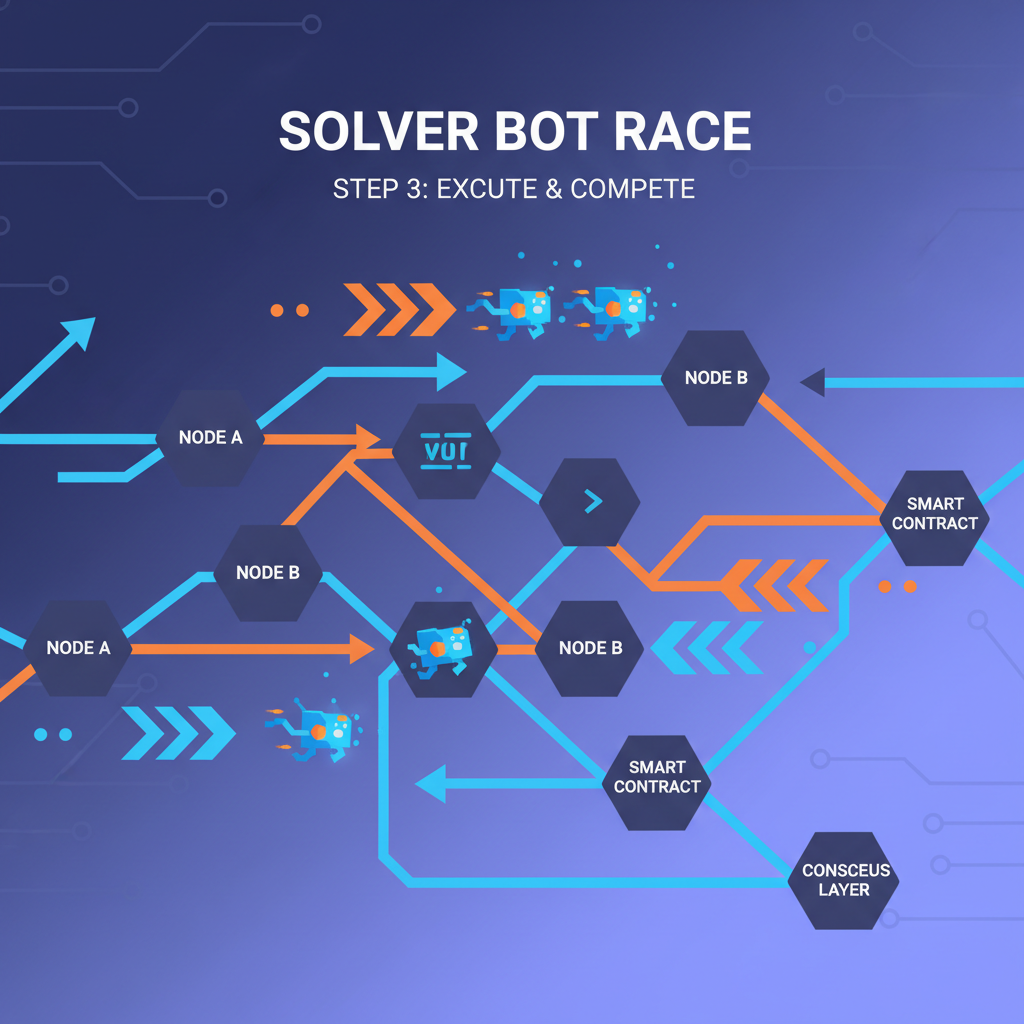
Building atop asset management, the Solver Matching Layer introduces competition among omnichain solvers to fulfill user intents optimally. Users or AI agents broadcast high-level desires, such as "swap 1 ETH for SOL at best rate across L2s, " without specifying routes. Solvers then craft execution plans, handling routing, gas optimization, and orchestration across disparate chains.
This market-driven mechanism mirrors DeFi's AMM innovation but for intents. Solvers stake capital to participate, earning fees for successful matches while facing slashing for failures. Data shows this layer drives NEAR Intents' $150 million daily volume, as solvers leverage integrations like THORChain for fallback routes. From an investment perspective, the layer's permissionless design fosters innovation; new solvers can emerge to target niche L3 liquidity, reducing slippage and costs. However, solver centralization risks persist, underscoring the need for diverse participation to sustain intents settlement layer robustness.
NEAR Protocol (NEAR) Price Prediction 2027-2032
Forecasts based on NEAR Intents adoption, cross-chain UX improvements, and $1.00 price baseline in 2026
| Year | Minimum Price | Average Price | Maximum Price | YoY % Change (Avg from Prev) |
|---|---|---|---|---|
| 2027 | $1.20 | $3.50 | $10.00 | +250% |
| 2028 | $2.00 | $5.50 | $15.00 | +57% |
| 2029 | $3.00 | $8.00 | $22.00 | +45% |
| 2030 | $4.50 | $11.00 | $30.00 | +38% |
| 2031 | $6.00 | $15.00 | $40.00 | +36% |
| 2032 | $8.00 | $20.00 | $55.00 | +33% |
Price Prediction Summary
NEAR Protocol is positioned for robust growth due to NEAR Intents' $6B+ volume, seamless cross-chain settlements via Chain Signatures, and AI agent integrations. From $1.00 in 2026, average prices could reach $20 by 2032 in base scenarios, with bullish highs up to $55 amid DeFi expansion and chain abstraction leadership. Minimums reflect bearish market cycles or competition, ensuring conservative ranges for investors.
Key Factors Affecting NEAR Protocol Price
- Massive NEAR Intents adoption with $6B total volume and $150M daily activity across 120+ assets
- Chain Signatures and MPC enabling secure, instant cross-chain settlement without custodians
- Integrations with SwapKit, THORChain, Litecoin, boosting liquidity and AI-powered routing
- Chain abstraction simplifying L2/L3 UX, driving user onboarding in multi-chain era
- Bullish market cycles post-2025, regulatory clarity for DeFi, and PoS sharding scalability
- Risks: market volatility, competition from Solana/Ethereum L2s, macroeconomic factors
Disclaimer: Cryptocurrency price predictions are speculative and based on current market analysis. Actual prices may vary significantly due to market volatility, regulatory changes, and other factors. Always do your own research before making investment decisions.
Fast Settlement Layer: Achieving Instant Cross-Chain Finality
The Fast Settlement Layer caps the architecture, ensuring executed intents settle swiftly using Chain Signatures. Once a solver's plan wins matching, NEAR validators provide co-signatures for batched transactions, settling assets atomically across chains. This bypasses slow probabilistic finality in PoS systems, offering sub-second confirmations even for L2-to-L3 flows.
Educational insight: traditional bridges rely on challenge periods, exposing funds to hacks; NEAR's MPC model distributes trust, aligning with sharded L1 efficiency. For end-users, this translates to Web2-like UX: express intent, pay low fees, receive assets instantly. Protocols like SwapKit amplify this via automatic fallbacks, solidifying NEAR Intents as a cross-chain asset layer for agentic commerce.
With over $6 billion in total volume and daily trades topping $150 million, this layer underpins NEAR Intents' scalability, supporting 120 and assets including recent Litecoin additions. Developers integrating via SwapKit gain AI-optimized paths, ensuring even complex L3 intents settle without user intervention.
Synergies Across NEAR Intents Layers: Unified Power for Cross-Chain UX
The true ingenuity emerges when the Chain Signatures Asset Management Layer, Solver Matching Layer, and Fast Settlement Layer converge, forming a robust NEAR Intents layers stack for chain abstraction routers. An intent originates at the user level, say, an AI agent seeking to arbitrage DeFi yields between an Optimism L2 and an Arbitrum L3 orbit chain. The Asset Management Layer secures signing authority via MPC, preventing single points of failure that plague traditional bridges.
Solvers then compete in the Matching Layer, bidding with optimized routes that factor in gas fees, liquidity depth, and MEV protection. The winning plan feeds into the Settlement Layer for atomic execution, where validators co-sign in parallel, delivering finality faster than most L1 confirmations. This orchestration abstracts away wallet management, chain selection, and slippage risks, yielding unified UX L2 L3 that feels native rather than fragmented.
From a fundamentals standpoint, this trinity outperforms rivals by embedding compliance and security natively. Solvers must prove execution fidelity, while Chain Signatures ensure non-custodial trust. I've evaluated similar protocols, and NEAR's sharded L1 backbone, bolstered by PoS efficiency, provides the throughput absent in congested L1s. At a stable $1.00 price for Binance-Peg NEAR, with minimal 24-hour volatility, the market signals undervaluation given intents' traction.
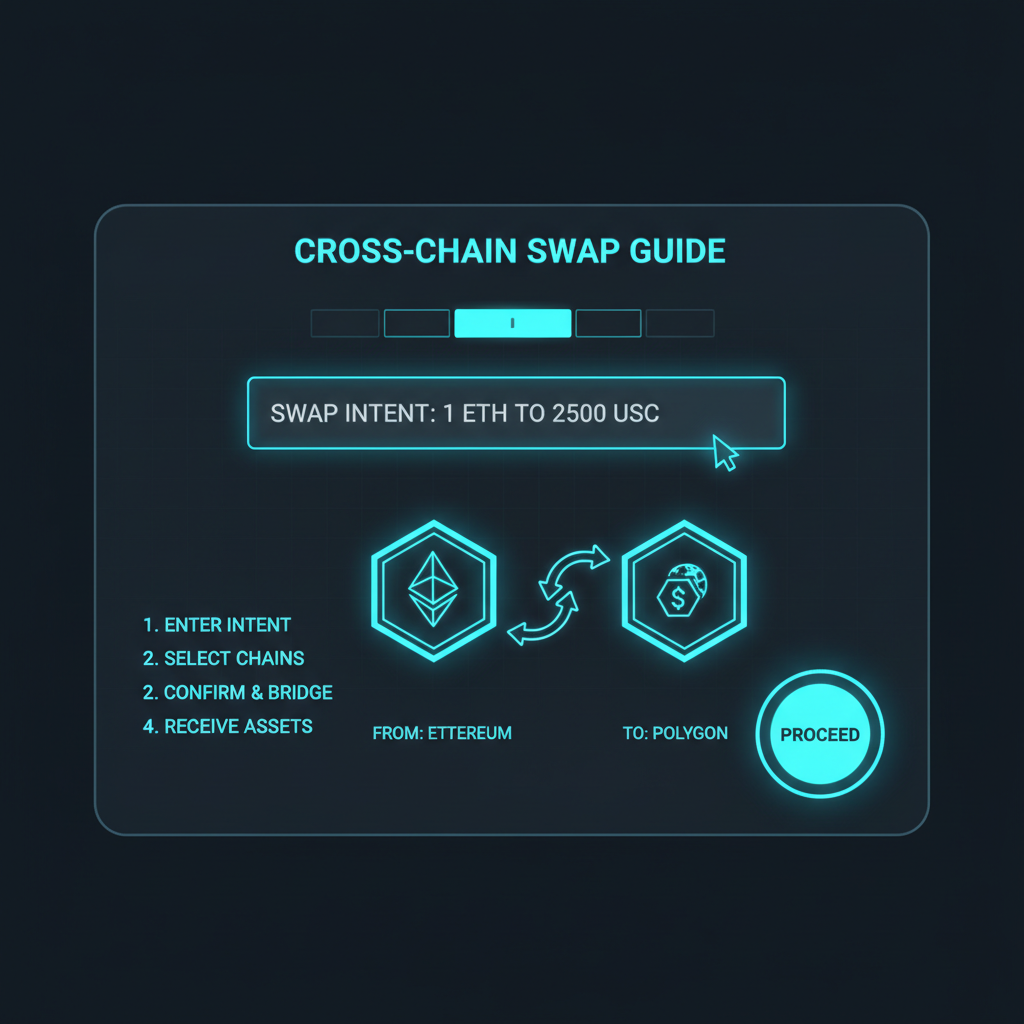
Step-by-Step: NEAR Intents Cross-Chain Swap Demo via Solvers & Chain Signatures


Performance Metrics: Quantifying Asset Settlement Efficiency
To appreciate the cross-chain asset layer impact, consider empirical data: NEAR Intents boasts sub-5-second average settlement times across 120 assets, versus 10-30 minutes for manual bridges. Daily volume at $150 million reflects solver competition driving 20-30% better rates than centralized exchanges. Integrations like THORChain add resilience, auto-falling back during congestion.
| Layer | Key Function | Benefit for L2/L3 UX | Performance Stat |
|---|---|---|---|
| Chain Signatures Asset Management | Secure cross-chain signing via MPC | Non-custodial asset control | Zero key exposure incidents |
| Solver Matching | Competitive intent fulfillment | Optimal routing and pricing | 150M and daily volume |
| Fast Settlement | Atomic co-signed finality | Sub-second confirmations | 6B and total volume processed |
This table underscores how each layer contributes to intents settlement layer supremacy. Solvers thrive on permissionless entry, yet staking enforces quality, slashing malfeasants preserves capital efficiency. For conservative investors, the $1.00 peg stability amid expansions signals a protocol maturing beyond hype, with AI agent compatibility poised to unlock agentic commerce volumes.
Real-world applications illuminate the edge. DeFi power users execute portfolio rebalances spanning Ethereum L2s, Solana, and emerging L3s without seed phrase juggling. Developers embed intents into dApps, offloading complexity to omnichain solvers. Recent Litecoin support exemplifies extensibility, pooling liquidity to slash fees by 40% on legacy asset swaps.
Challenges linger: solver diversity remains nascent, potentially inviting front-running if participation lags. Yet NEAR's ecosystem incentives, via grants and low-cost intents, should magnetize more actors. Looking ahead, as L3s fractalize, these layers position NEAR as the abstraction hub, much like how AWS unified cloud UX. Fundamentals here scream resilience: secure, scalable, and user-centric, fostering Web3's multichain maturity without sacrificing sovereignty.




No comments yet. Be the first to share your thoughts!