What omnichain UX actually means
Omnichain refers to a blockchain infrastructure that leverages chain abstraction to facilitate seamless interaction, data transfer, and transaction settlement across multiple networks. Instead of forcing users to manually bridge assets or switch wallets for every new chain, omnichain UX treats the underlying fragmentation as a backend concern. The user sees a single, unified interface, regardless of whether the underlying transaction settles on Ethereum, Solana, or a specialized L2.
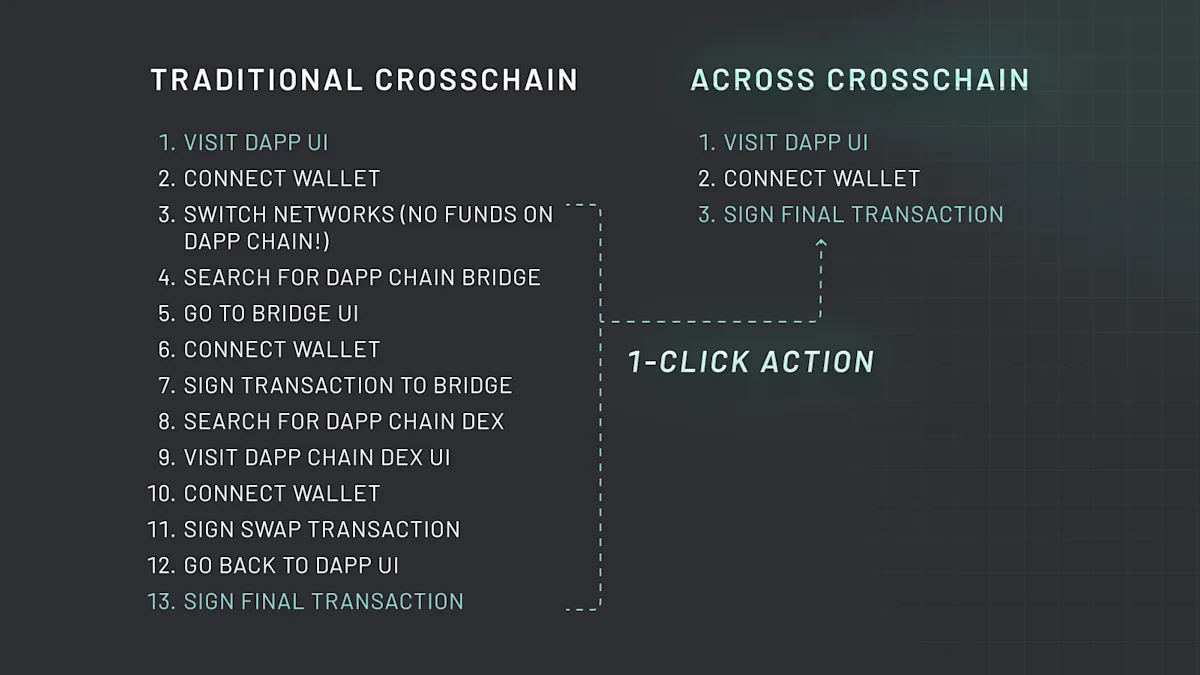
This approach shifts the complexity from the user to the protocol. In a traditional multi-chain experience, a user must understand gas fees, token standards, and bridge risks for each chain they interact with. Omnichain UX abstracts these details, allowing applications to handle the routing and settlement logic invisibly. The result is an experience that feels like a single app rather than a fragmented ecosystem of disconnected wallets.
The definition is straightforward, but the implementation varies. Some solutions focus on cross-chain messaging, while others prioritize seamless asset liquidity. The common thread is the removal of friction. For a user, it means clicking "Approve" once and having the transaction route to the most efficient destination chain automatically, without the user needing to understand the technical mechanics of how that routing occurs.
Why seamless experience is no longer optional
The barrier to entry for new users remains the complexity of managing multiple chains. Research indicates that the majority of drop-off in Web3 applications occurs during the onboarding and first-transaction phases. When users are asked to bridge assets, select a network, and manage multiple token balances, the cognitive load becomes a significant deterrent. Seamless UX removes these hurdles, making the technology accessible to non-technical audiences.
From a business perspective, fragmented UX limits growth. If a DeFi protocol requires users to navigate three different bridges to access liquidity, many will simply not bother. Omnichain infrastructure allows protocols to tap into liquidity pools across the entire crypto market without forcing users to leave their preferred chain. This increases the total addressable market and improves capital efficiency for the application.
The market is already reflecting this shift. As major chains and interoperability protocols mature, the expectation for a unified experience is becoming standard. Applications that continue to treat chains as silos risk losing users to platforms that offer a smoother, more integrated journey. The transition from "multi-chain" to "omnichain" is not just a technical upgrade; it is a necessary evolution for mainstream adoption.
Choose the Next Step: A Decision Framework
Omnichain infrastructure removes the friction of choosing a specific network before transacting. Instead of manually bridging assets or swapping tokens across isolated chains, users interact with a single interface while the underlying protocol routes transactions across the most efficient layer. This abstraction turns complex backend routing into a seamless frontend experience.
To implement this effectively, you must evaluate your stack against four critical dimensions. The goal is to select a solution that balances user convenience with security guarantees and cost efficiency.
Identify where users drop off. Are they abandoning carts because gas fees spike on Ethereum? Are they leaving because they cannot find their assets on the current chain? Map the exact moment the user feels the "chain" rather than the application. If the friction is purely visual, a unified wallet view may suffice; if it is structural, you need full chain abstraction.
Not all bridges are equal. Evaluate protocols like LayerZero or Wormhole based on their finality guarantees and historical security audits. For high-stakes finance, prioritize protocols with proven track records and decentralized verifier networks over newer, untested cross-chain messaging layers. The cost of a bridge exploit far outweighs the convenience of faster transactions.
Users should rarely think about gas. Implement sponsored transactions or account abstraction (ERC-4337) so your platform pays for fees in the background. This requires integrating a paymaster service that can handle batched transactions across multiple chains. The result is a Web2-like experience where the user only sees the final cost of the asset they are buying.
Omnichain does not mean instant. Measure the time between user confirmation and final settlement on the destination chain. If your application requires real-time data (like live trading), ensure your oracle feeds are synchronized across chains. Latency mismatches can lead to stale data and failed transactions, undermining the trust you are trying to build.
Spotting weak omnichain claims
Omnichain infrastructure promises seamless interaction, data transfer, and transaction settlement across networks. However, many projects market this as a simple plug-and-play solution. In reality, chain abstraction introduces significant complexity that often gets glossed over in marketing materials.
Investors and users must look past the buzzwords. A true omnichain experience requires robust cross-chain messaging protocols and secure bridge mechanisms. Without these, the "seamless" experience is an illusion that can lead to lost funds or stuck transactions.
Common pitfalls to avoid
1. Ignoring bridge security Many projects rely on centralized bridges that act as single points of failure. Always verify if the cross-chain mechanism is decentralized and audited. A weak bridge undermines the entire omnichain value proposition.
2. Overlooking gas fees Seamless UX often hides the true cost of cross-chain transactions. Users may encounter unexpected gas fees on multiple chains. Transparency in fee structures is critical for maintaining trust.
3. Assuming full compatibility Not all smart contracts are portable across chains. Code written for Ethereum may not function correctly on other EVM-compatible or non-EVM chains without significant modification. Verify technical compatibility before committing resources.
The market is still maturing. Distinguish between projects with proven cross-chain infrastructure and those merely using the term for hype. Due diligence here is not optional; it is essential for protecting your assets.
Omnichain ux: what to check next
What does Omnichain mean?
Omnichain infrastructure uses chain abstraction to unify separate blockchains into a single logic layer. This allows data and transactions to flow seamlessly across networks without requiring users to manually bridge assets or switch wallets. The goal is a unified experience where the underlying chain becomes invisible to the end user.
Is blockchain viewable by anyone?
Yes, most public blockchains are transparent ledgers, meaning anyone can view transaction histories and wallet balances. However, omnichain solutions often integrate privacy layers or zero-knowledge proofs to obscure sensitive data while maintaining verification. This ensures that while the network remains secure and auditable, individual user privacy is not fully exposed to the public.
No comments yet. Be the first to share your thoughts!