
Defining the omnichain UX standard
The term "omnichain" describes a blockchain infrastructure that leverages chain abstraction to facilitate interaction, data transfer, and transaction settlement across multiple networks without exposing the underlying complexity to the user. Unlike traditional cross-chain solutions, which require users to actively manage asset movement between distinct ledgers, omnichain systems unify these chains under a single logical layer. This distinction marks a shift from mere interoperability to true abstraction, where the specific settlement layer becomes invisible to the end user.
Traditional cross-chain infrastructure typically relies on bridges, which are smart contract mechanisms that lock assets on one chain and mint representations on another. While this enables basic interoperability, it introduces significant friction and security risk. Users must manually approve transactions, pay gas fees in the native currency of each chain, and navigate different wallet interfaces for every network they interact with. The user experience is fragmented, requiring a deep understanding of which chain holds their assets and which network they are currently using.
Omnichain UX, by contrast, treats the entire blockchain ecosystem as a single, unified computing environment. Through protocols like LayerZero, which provides the messaging infrastructure for chain abstraction, applications can read state and execute transactions across any connected chain seamlessly. The user interacts with a single interface, paying fees in a single currency, while the backend infrastructure handles the routing, settlement, and asset movement. This approach mirrors how cloud computing abstracted server management from application developers, allowing for a more intuitive and efficient financial experience.
The architectural difference is fundamental. Cross-chain solutions focus on moving value between silos. Omnichain solutions focus on dissolving the silos entirely. This requires a more sophisticated technical foundation, often involving off-chain relayers and lightweight validators to ensure message integrity across disparate consensus mechanisms. The result is a user experience where the concept of "cross-chain" disappears, replaced by a continuous, uninterrupted interaction with decentralized applications.
Comparing cross-chain and omnichain models
Legacy cross-chain infrastructure relies on a fragmented ecosystem of distinct bridges, each functioning as an isolated silo. This architecture forces users to navigate a complex web of protocols to move assets between networks. In contrast, omnichain routing protocols operate on a unified logic layer that abstracts these underlying complexities. By treating multiple blockchains as a single interoperable ecosystem, omnichain systems reduce the cognitive load on the user and standardize the interaction flow.
The divergence in user experience is measurable in operational steps and security exposure. Traditional bridge architectures require manual selection of the correct exit chain and often involve wrapping assets in multiple steps. Omnichain models automate this routing, allowing users to interact with a dApp on one chain while the protocol handles the settlement on another. This shift transforms cross-chain interaction from a multi-step technical task into a single, coherent transaction.
The table below compares the operational mechanics of legacy bridge architectures against modern omnichain routing protocols.
| Metric | Legacy Bridge Architecture | Omnichain Routing Protocol |
|---|---|---|
| User Steps | 3-5 steps (wrap, select bridge, unwrap, approve) | 1-2 steps (approve, swap with native token) |
| Gas Fees | Paid on both source and destination chains; often duplicated | Paid primarily on source chain; destination gas abstracted |
| Security Model | Dependent on individual bridge validators; high attack surface | Shared security layer; unified verification logic |
| Settlement Time | Variable; often requires manual confirmation on exit chain | Predictable; automated finality across all chains |
Technical standards powering interoperability
The abstraction of cross-chain complexity relies on underlying protocols that decouple messaging from execution. This architectural separation allows applications to maintain a unified user experience while interacting with distinct blockchain states. LayerZero’s Omnichain Token (OFT) standard serves as a primary example, providing a unified framework to transfer both fungible and non-fungible tokens across different networks without requiring developers to manage disparate bridge contracts.
By separating the message passing layer from the execution layer, these standards ensure that liquidity movements are atomic and verifiable. This reduces the attack surface associated with traditional bridging mechanisms, where assets often lock on one chain and mint wrapped versions on another. Instead, the protocol verifies the state change across chains, ensuring that the user’s asset balance is accurately reflected regardless of the destination network.
This technical foundation supports the broader omnichain UX standard by handling the heavy lifting of consensus and verification. Developers can focus on interface design and utility, confident that the underlying messaging layer will deliver transactions reliably. As the ecosystem matures, these standards are becoming the default infrastructure for cross-chain liquidity, enabling financial applications to operate as if they exist on a single, unified chain.
Reducing crypto onboarding friction
The primary barrier to mainstream adoption in Web3 has historically been the complexity of multi-chain interactions. Users are forced to manage distinct wallet addresses, manually bridge assets across incompatible networks, and acquire native gas tokens for every different chain they wish to use. This fragmented experience creates significant cognitive load and transactional friction, effectively excluding non-technical users from participating in decentralized ecosystems.
Omnichain architecture addresses this by abstracting the underlying infrastructure. Instead of requiring users to understand which blockchain a dApp resides on, omnichain protocols handle the routing and settlement in the background. This allows applications to present a unified interface, similar to how the traditional internet hides the complexity of TCP/IP routing from end-users. The result is a reduction in the steps required to complete a transaction, directly lowering the barrier to entry for new participants.
Gas abstraction is another critical component of this reduction in friction. Traditional models require users to hold the native token of each specific network to pay for transaction fees. Omnichain solutions often employ paymaster contracts that allow users to pay fees in stablecoins or the native token of their choice, regardless of the target chain. This eliminates the need for complex pre-transaction asset swaps and bridge operations.
The volatility of gas costs remains a significant variable in user experience. To contextualize the economic impact of these friction points, it is useful to observe the baseline cost of network activity.
By decoupling the user experience from the specific mechanics of blockchain settlement, omnichain systems transform crypto interaction from a technical chore into a standard digital utility. This shift is essential for scaling the addressable market beyond early adopters. As noted in recent academic frameworks, this approach mirrors the unification of the internet itself, creating a composable marketplace where the underlying chain is irrelevant to the user (LayerZero, 2024).
Evaluating tradeoffs and security risks
Omnichain architectures promise a unified logic layer, but this abstraction introduces distinct security and operational tradeoffs. The primary vulnerability lies in the abstraction layer itself. By hiding cross-chain messaging behind a simplified interface, developers may inadvertently bypass critical verification steps, creating gaps where smart contract exploits can occur. This is not merely a theoretical risk; formal verification of omnichain bridges remains a complex engineering challenge that many teams have yet to fully resolve.
Centralization concerns also warrant scrutiny. While the user experience appears decentralized, the underlying infrastructure often relies on a limited set of validators or oracles to facilitate message passing. If these nodes are compromised or collude, the entire cross-chain operation can be disrupted. This creates a single point of failure that contradicts the core ethos of distributed ledger technology. Investors must distinguish between true decentralization and centralized gateways masquerading as omnichain solutions.
The complexity of implementation further complicates the landscape. Building a robust omnichain stack requires deep expertise in multiple blockchain consensus mechanisms. This high barrier to entry means that fewer, larger players dominate the space, potentially leading to oligopolistic tendencies. For the average user, this may result in reduced competition and higher fees over time. The promise of seamless interoperability must be weighed against the reality of concentrated control and technical fragility.
Technical analysis of current omnichain protocols shows mixed results. While some networks have demonstrated resilience, others have suffered significant exploits due to poorly audited abstraction layers. The market is still maturing, and the long-term stability of these systems remains unproven. Caution is advised for those considering heavy exposure to omnichain-based assets or infrastructure.
Checklist for adopting omnichain design
Implementing omnichain architecture requires shifting from a multi-chain aggregation model to a unified logic layer. Developers must audit their stack to ensure that user experience is decoupled from underlying chain complexity. This section outlines the essential steps for achieving omnichain readiness in 2026.
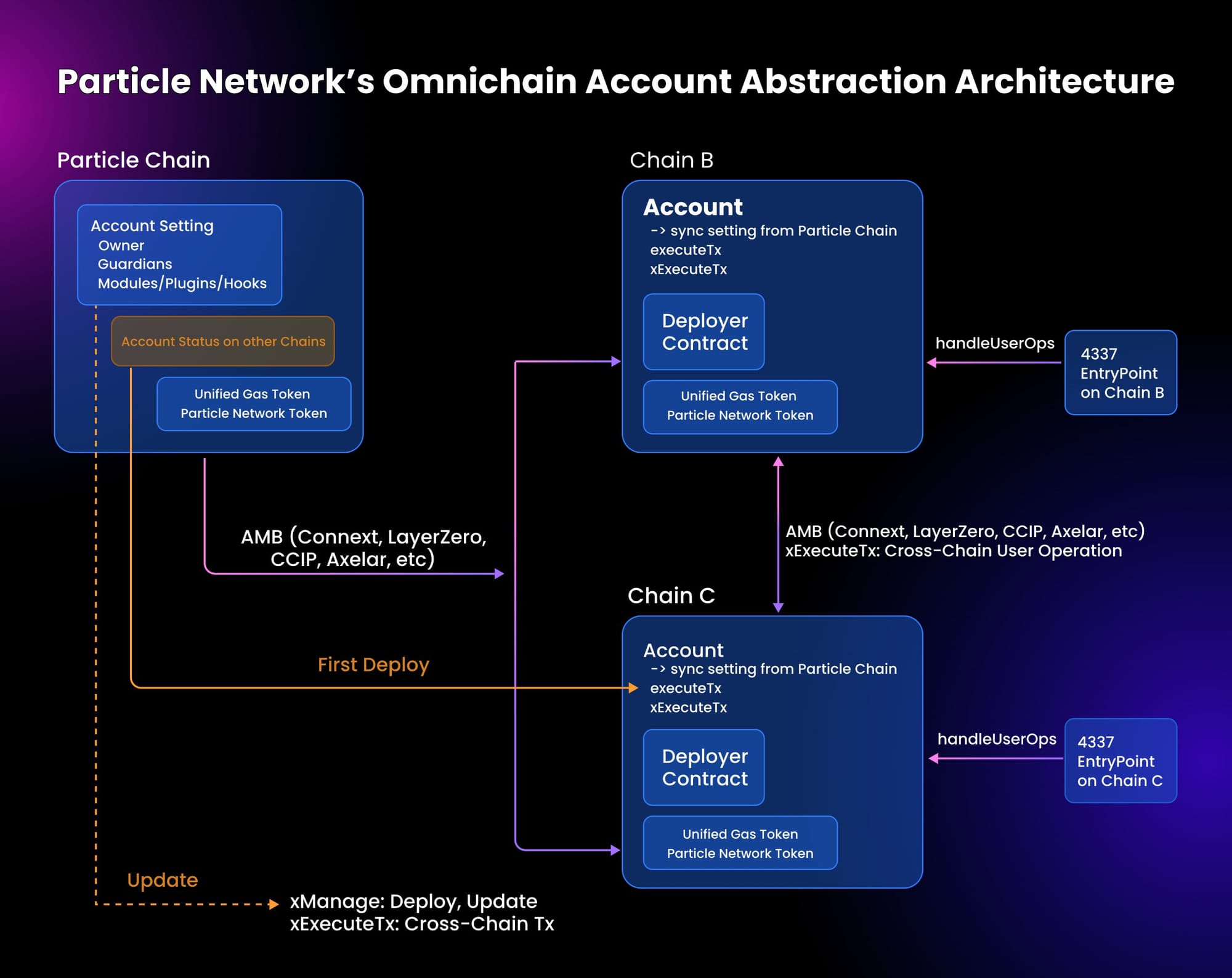
Users should never manage native tokens for gas on destination chains. Implement paymaster contracts or account abstraction to allow users to pay fees in their preferred currency, typically the native token of the source chain or a stablecoin. This removes the friction of bridging assets for transaction costs.
Maintain a single wallet interface across all supported networks. Use session keys or account abstraction to handle signature verification seamlessly. The user should interact with one address, while the backend routes messages to the appropriate chain. This prevents the confusion of switching networks in the wallet UI.
Integrate with official omnichain protocols like LayerZero or CCIP to ensure reliable message delivery. Always check the finality guarantees of the destination chain before confirming user actions. Rely on verified oracles and relayers to prevent state inconsistencies between chains.
Adopt omnichain token standards such as OFT (Omnichain Fungible Token) or CCIP for asset movement. These standards allow a single token contract to exist across multiple chains with unified supply. This simplifies liquidity management and ensures consistent token behavior regardless of the network.

Conduct rigorous testing on both mainnet and testnet environments for every supported chain. Verify that gas abstraction, wallet connectivity, and message passing work correctly under various network conditions. Use automated testing frameworks to simulate cross-chain transactions and edge cases.
Adopting these standards positions your application to meet the 2026 expectation for frictionless cross-chain interaction. By prioritizing user experience over technical complexity, you can build a robust omnichain product that scales with the evolving blockchain landscape.
No comments yet. Be the first to share your thoughts!