


Paxos Labs has unveiled USDG0, a pivotal advancement in omnichain stablecoins that leverages LayerZero’s Omnichain Fungible Token (OFT) standard to deliver regulated dollar liquidity across diverse blockchain ecosystems. This bridged extension of the established USDG stablecoin, boasting a market capitalization exceeding $997 million, eliminates the friction of wrapped tokens and bridges. Initial rollouts target Hyperliquid, Plume, and Aptos, including Move-based implementations that sidestep traditional ERC-20 constraints. For developers and DeFi users navigating L2 and L3 scaling layers, USDG0 represents a leap toward chain abstraction stablecoins, promising seamless cross-chain UX without compromising Paxos’ rigorous backing and compliance.

At its core, USDG0 addresses a longstanding pain point in multichain DeFi: liquidity fragmentation. Traditional stablecoins often require chain-specific issuances or risky wrappers, exposing users to counterparty risks and slippage. LayerZero’s OFT protocol flips this script by enabling tokens to exist natively on every supported chain. Burns and mints happen atomically during transfers, ensuring 1: 1 parity and sub-second settlement times. This isn’t mere interoperability; it’s a unified token framework that abstracts away chain-specific complexities, aligning perfectly with the rise of intents-based architectures.
Decoding LayerZero OFT: The Engine Behind USDG0’s Cross-Chain Magic
LayerZero’s OFT standard builds on its battle-tested omnichain messaging protocol, which has facilitated billions in cross-chain volume. Unlike conventional bridges that lock assets on one chain and mint representations elsewhere, OFT treats the token as a single, chain-agnostic entity. When a user sends USDG0 from, say, Ethereum to Aptos, the protocol verifies the burn on the source chain via LayerZero’s oracle-verifier duo, then triggers a mint on the destination. This process maintains Paxos-level security throughout, with every transaction audited against the issuer’s reserves.
What sets OFT apart for USDG0 LayerZero OFT deployments is its adaptability. On EVM chains like Hyperliquid, it deploys as an ERC-20 compatible contract. But on Move-based networks such as Plume and Aptos, it integrates natively with the Move VM, bypassing the need for compatibility layers. This flexibility underscores LayerZero’s maturity in supporting L2/L3 diversity, from high-throughput rollups to modular frameworks. Developers benefit from standardized interfaces, reducing integration time from weeks to hours while users enjoy frictionless swaps and lending across ecosystems.

Built with LayerZero’s OFT Standard, USDG0 brings @Paxos-grade trust to new chains for users to build, trade, and transact. https://t.co/yhBVoVmSo1
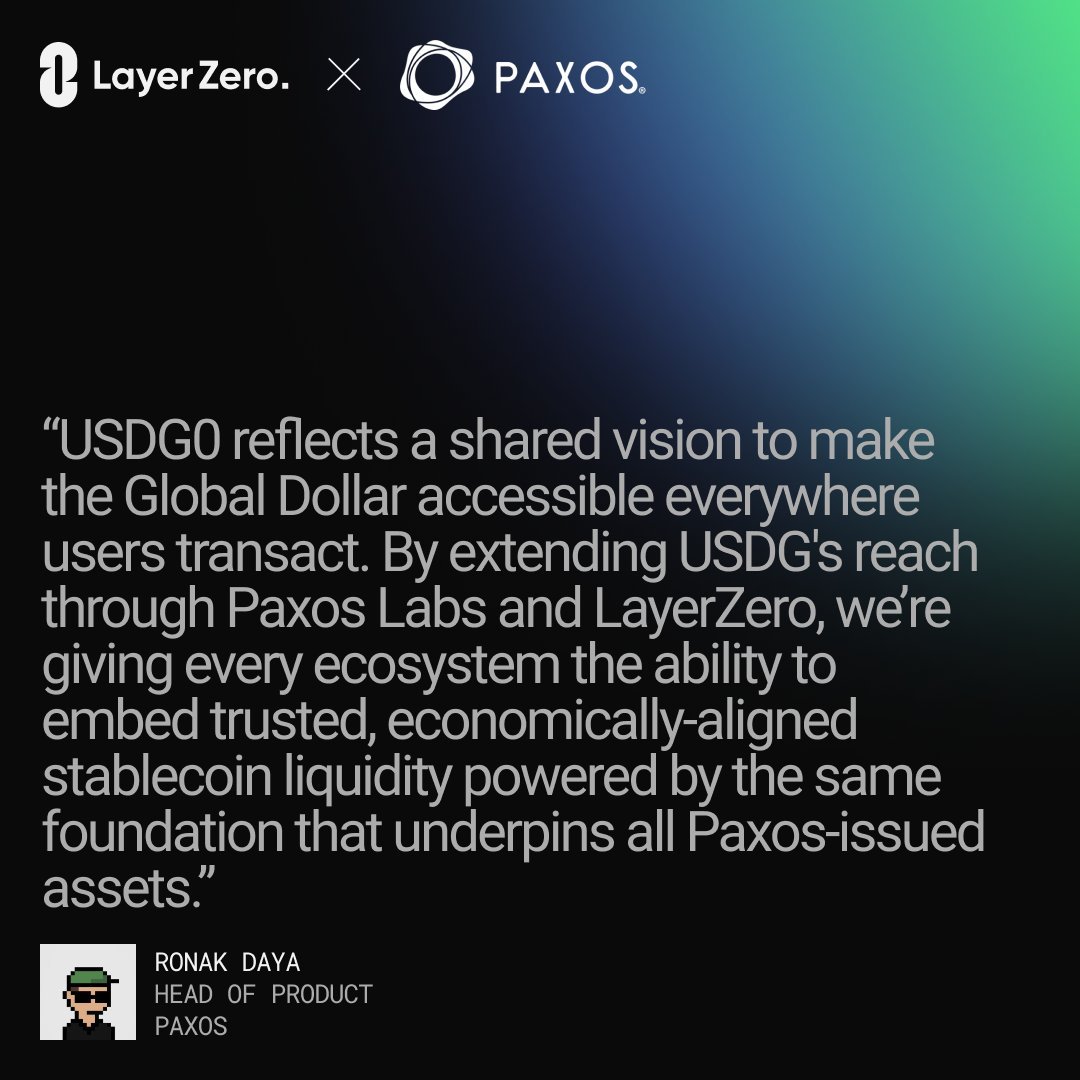

Paxos USDG Evolution: Regulated Stability Meets Omnichain Scale
USDG itself emerged from Paxos’ decade-long track record in regulated digital assets, holding a New York BitLicense and full reserves in short-term Treasuries and cash equivalents. With over $1 billion in circulation historically, it has powered institutional DeFi without the depegging dramas plaguing less compliant rivals. USDG0 extends this trust model to chains where direct issuance isn’t feasible, such as emerging L3s focused on specialized use cases like perpetuals on Hyperliquid.
The omnichain pivot isn’t hype-driven; it’s a calculated response to DeFi’s multichain reality. Protocols now span dozens of networks, yet stablecoin liquidity lags. USDG0 bridges this gap, enabling 1: 1 transfers without slippage or intermediaries. Security remains paramount: all cross-chain actions inherit USDG’s attestations, with LayerZero’s decentralized verifiers preventing exploits seen in past bridge hacks.
Breaking Down Initial Deployments: Hyperliquid, Plume, and Aptos in Focus
Hyperliquid, a leader in decentralized perpetuals, gains USDG0 to fuel margin trading with compliant dollar collateral. Its high-performance L2 architecture demands fast, reliable liquidity, which OFT delivers without the latency of external oracles. Plume, another Move pioneer, targets real-world asset tokenization, where USDG0’s stability pairs ideally with yield-bearing synthetics. Aptos, with its parallel execution engine, amplifies this by onboarding USDG0 for broad DeFi primitives, from DEXes to lending markets.
These L2 L3 deployments highlight a broader trend: chain abstraction routers prioritizing developer ergonomics and user sovereignty. By deploying USDG0 via OFT, Paxos not only expands its footprint but also validates LayerZero as the go-to for cross-chain UX. Early metrics suggest rapid adoption, with TVL inflows signaling confidence in this regulated omnichain approach. For investors eyeing long-term crypto fundamentals, USDG0 exemplifies how infrastructure layers like LayerZero unlock scalable, compliant DeFi across fragmented scaling solutions.
About the Author