
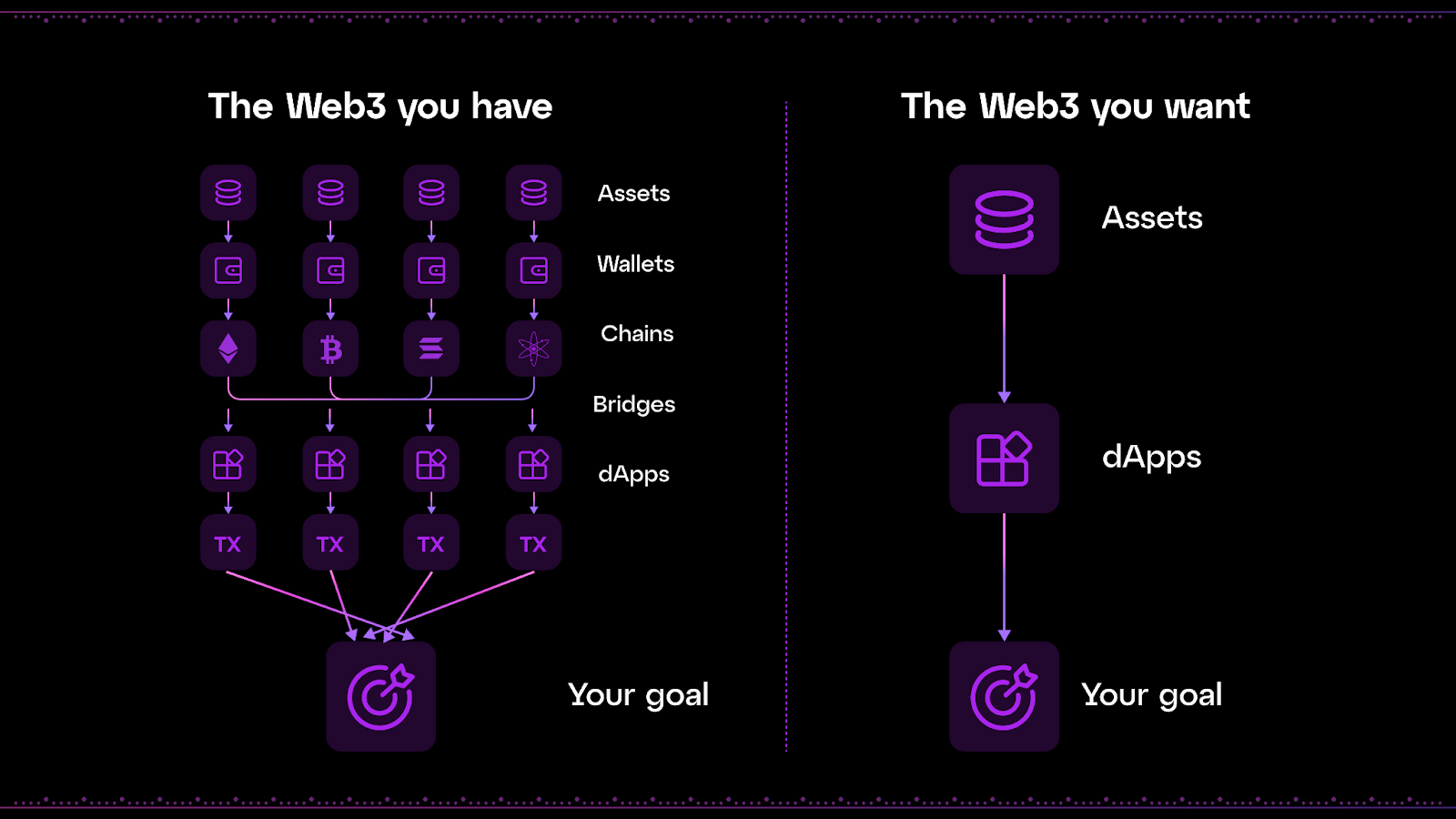
Imagine wanting to swap USDC on Arbitrum for ETH on Optimism without bridging, approving multiple transactions, or sweating over gas fees. In today’s fragmented L2 ecosystem, that’s usually a multi-step nightmare. Enter intent-based solvers, the game-changers in chain abstraction routers that turn this into a true one-click cross-L2 swap. Users declare their desired outcome, and solvers battle it out to deliver it optimally. This isn’t hype; it’s the practical path to unified UX across L2s and L3s, slashing friction for DeFi traders like me who’ve chased swings across chains for years.

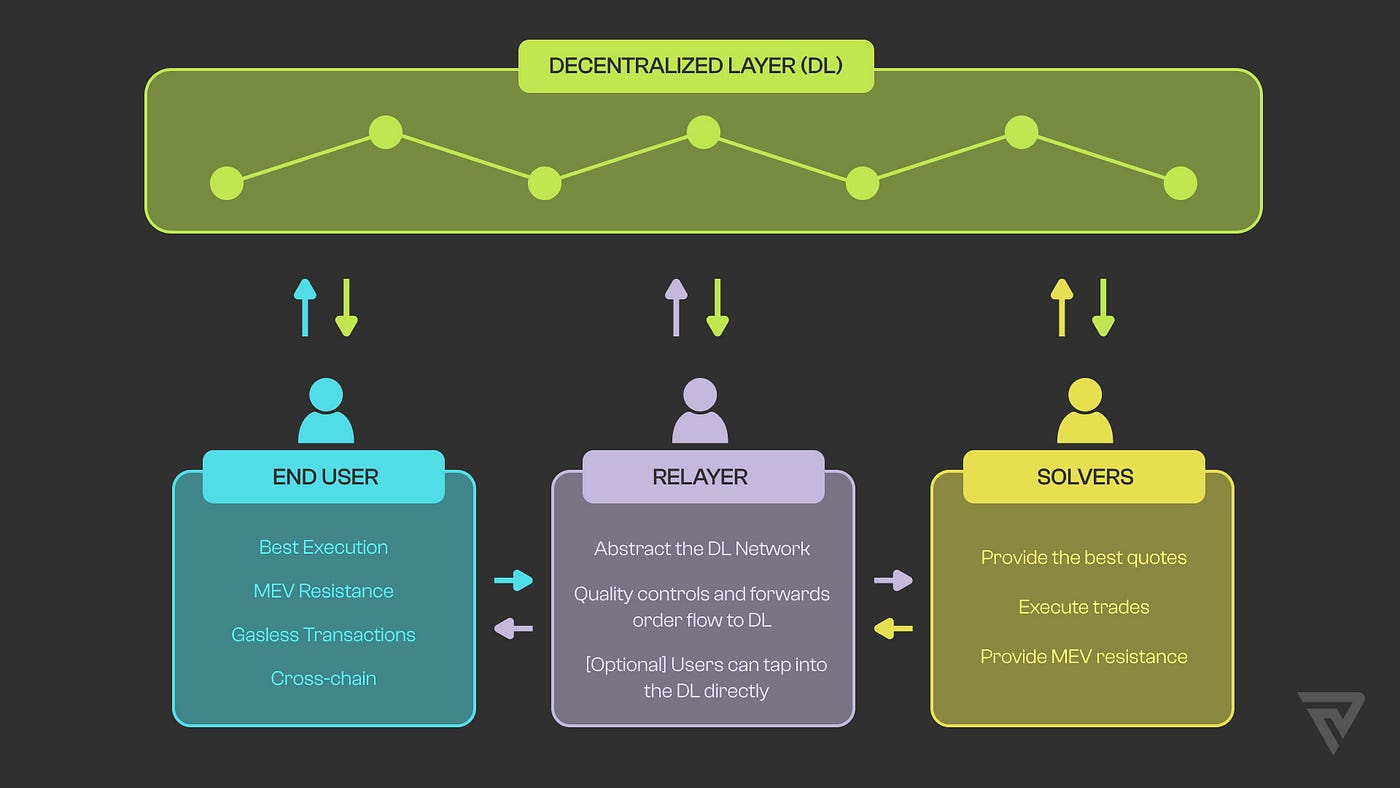
Solvers thrive in this setup because they offload the complexity. You sign once, expressing your intent – say, “Swap 100 USDC from Base to wBTC on Blast with minimal slippage” – and a network of off-chain actors competes to fulfill it. The best bid wins, often bundling bridges, DEX routes, and even MEV protection. From my swing trading vantage, this means capturing medium-term opportunities without chain-hopping headaches. Protocols like those from LI. FI and Rango Exchange highlight how this shifts power from rigid transactions to flexible outcomes.
Intents: From User Wish to Blockchain Reality
At its core, an intent is your high-level goal, not a low-level instruction set. Traditional cross-chain swaps demand you pick bridges, DEXs, and timings yourself – a recipe for errors and lost value. Intent-based systems flip the script: describe the end state, let solvers handle the how. As Jitender Singh notes in his Web3 tutorial, it’s like telling a travel agent “Get me from A to B cheapest and fastest” instead of booking every leg manually.
Viem Code Example: Signing and Submitting a Cross-L2 Swap Intent
Ready to implement one-click cross-L2 swaps? Here’s a practical Viem example straight from the Devcon SEA Ethereum Foundation talk on intent-based solvers. This code creates a signed intent to swap 1 WETH on Mainnet for USDC on Arbitrum—solvers handle the rest!
import { createWalletClient, http, parseEther } from 'viem';
import { mainnet } from 'viem/chains';
import { privateKeyToAccount } from 'viem/accounts';

const account = privateKeyToAccount('0xYOUR_PRIVATE_KEY');

const walletClient = createWalletClient({
  account,
  chain: mainnet,
  transport: http(),
});

const INTENT_TYPES = {
  Intent: [
    { name: 'fromChainId', type: 'uint256' },
    { name: 'toChainId', type: 'uint256' },
    { name: 'inputToken', type: 'address' },
    { name: 'outputToken', type: 'address' },
    { name: 'inputAmount', type: 'uint256' },
    { name: 'minOutputAmount', type: 'uint256' },
    { name: 'deadline', type: 'uint256' },
    { name: 'nonce', type: 'uint256' },
  ],
} as const;

const domain = {
  name: 'ChainAbstractionRouter',
  version: '1',
  chainId: 1,
} as const;

const intent = {
  fromChainId: 1n,
  toChainId: 42161n, // Arbitrum
  inputToken: '0xC02aaA39b223FE8D0A0e5C4F27eAD9083C756Cc2' as const, // WETH Mainnet
  outputToken: '0xFF970A61A04b1cA14834A43f5dE4533eBDDB5CC8' as const, // USDC Arbitrum
  inputAmount: parseEther('1'),
  minOutputAmount: 1000000n * 1000000n, // 1 USDC (6 decimals)
  deadline: BigInt(Math.floor(Date.now() / 1000) + 3600), // 1 hour
  nonce: 0n,
};

const signature = await walletClient.signTypedData({
  account,
  domain,
  types: INTENT_TYPES,
  primaryType: 'Intent',
  message: intent,
});

// Submit to solver network
await fetch('https://solver.chainabstractionrouter.example/intents', {
  method: 'POST',
  headers: { 'Content-Type': 'application/json' },
  body: JSON.stringify({ signature, intent }),
});

console.log('Intent submitted! Solvers are now competing to fulfill your cross-L2 swap.');
Boom! With this setup, users get seamless swaps without bridging or chain-switching. Replace the private key with your wallet (e.g., via WalletConnect), tweak the intent params, and watch solvers deliver. Pro tip: Fetch real-time nonce and quotes for production.
This abstraction shines in chain abstraction routers, where viem chain abstraction libraries simplify dev integration. Solvers scan liquidity across L2s, factoring real-time data like gas prices and pool depths. They might split your swap across Uniswap on one chain and Curve on another, all invisible to you. I’ve tested setups where execution beats manual routing by 2-5% on slippage, crucial for volatile cross-chain assets.
Solvers as the Competitive Engine
Solvers aren’t monolithic; they’re a marketplace. Builders – from solo devs to VC-backed teams – run nodes that bid on intents via auctions. The winner posts a fulfillment bond, executes via smart contracts, and claims fees if successful. Losers? They learn and iterate. This Darwinian dynamic ensures efficiency, as Modular Media’s Substack piece argues: solvers are the backbone of blockchain interoperability.

Gas abstraction adds practicality – solvers often front fees, reimbursed from your trade surplus. In L2-heavy portfolios, this means no more chain-specific wallets or native token top-ups. Take 7blocklabs’ guide: a multi-bridge swap becomes atomic, reducing signature count from 10 and to one. For traders, it’s swing setup gold – enter positions fluidly, exit without borders.
Battle-Tested Protocols Leading the Charge
SODAX exemplifies this with intent-based cross-chain swaps across multiple blockchains, boasting competitive fees and quick execution. NEAR Intents takes it further, integrating Sui for bridgeless asset swaps that feel native. Compare to stalwarts: UniswapX and CoW Protocol excel on Ethereum L2s, while Eco’s 2025 guide ranks them for multi-chain prowess. Mitosis pushes boundaries, outpacing CowSwap in cross-chain speed per their university deep-dive.
LI. FI and Rango Exchange embed intents into aggregators, routing via solver networks. Devs leverage these for one-click swaps in chain abstraction, with backends handling liquidity APIs and algorithms as ChainScore Labs details. From my 7 years swinging omnichain assets, these tools align technical setups with L2/L3 dynamics perfectly. The result? Frictionless DeFi where unified UX reigns.
Building these systems demands smart backend design, blending on-chain verification with off-chain solver auctions. ChainScore Labs’ guide nails it: liquidity APIs feed real-time data into routing algorithms that solvers optimize. Devs using viem chain abstraction can plug in intents with minimal code, turning complex flows into atomic executions. Picture this: your frontend broadcasts the intent, solvers crunch numbers across L2s, and the winner settles on-chain. No more fragmented UX – just seamless cross-L2 swaps that feel like single-chain trades.
Comparison of Top Intent-Based Protocols
| Protocol | Key Features | Supported Chains | Avg Execution Time | Fee Structure |
|---|---|---|---|---|
| UniswapX | Dutch auction, solver competition, gas abstraction ✅ | Ethereum, Arbitrum, Optimism, Base, Polygon, ZKsync | 30s – 2min | 0-50% of surplus via Dutch auction |
| CoW Protocol | Batch auctions, MEV protection, coincidence of wants matching ✅ | Ethereum, Gnosis Chain, Polygon, Optimism, Gnosis | 1-10min | 12% of surplus + gas costs |
| Eco | Seamless multi-chain intents, chain abstraction, optimized routing | EVM chains + non-EVM (multi-chain focus) | <1min | Competitive solver fees, minimal user cost |
| Mitosis | Cross-chain liquidity swaps, intent-based execution, no bridges needed | Multiple L2s (Arbitrum, Optimism, etc.), EVM-compatible | Seconds to 1min | Optimized, slippage-minimized fees |
| SODAX | Intent-based cross-chain swaps, one-click execution | Multiple blockchains (L2s + others) | Low (under 2min) | Competitive fees, gas covered by solvers |
| NEAR Intents | Fast intent-driven swaps, bridge-less, Sui integration | NEAR, Sui, EVM L2s | Sub-second to 1min | Minimal fees, solver subsidized |
From a trader’s lens, the edge is clear. I’ve swung positions from Arbitrum perps to Base yields, and intent solvers cut my execution time by half while shaving slippage. UniswapX shines for Ethereum L2s with Dutch auctions ensuring best prices, while CoW Protocol batches intents for MEV resistance. Eco’s 2025 guide spots Mitosis as a riser for speed, often beating CowSwap in cross-chain tests. SODAX and NEAR Intents push boundaries further, with Sui integration enabling bridgeless swaps that settle in seconds.
Real-World Edge: Swinging with Solvers
Solvers turn volatility into opportunity. Say ETH pumps on Optimism while USDC sits idle on Polygon – declare the intent, and solvers route via optimal DEXs and bridges, fronting gas if needed. This gas abstraction is clutch for medium-term holds; no scrambling for L2 natives mid-swing. 57Blocks highlights how LI. FI’s intents simplify this, securing UX without sacrificing decentralization. Rango Exchange echoes it: intents are the endgame, focusing on outcomes over ops.
Perks for Swing Traders
-
Reduced Slippage: Solvers like those in UniswapX and CoW Protocol compete to find optimal routes across L2s, minimizing price impact for better trade fills.
-
Gas Abstraction: Platforms such as LI.FI and SODAX handle gas fees behind the scenes, letting traders focus on swings without chain-specific costs.
-

MEV Protection: Intent solvers use batch auctions (e.g., CoW Protocol) to shield trades from front-running and sandwich attacks.
-
Multi-Chain Liquidity Access: Tap deep pools across L2s via NEAR Intents or Mitosis, unlocking best prices without bridges.
-
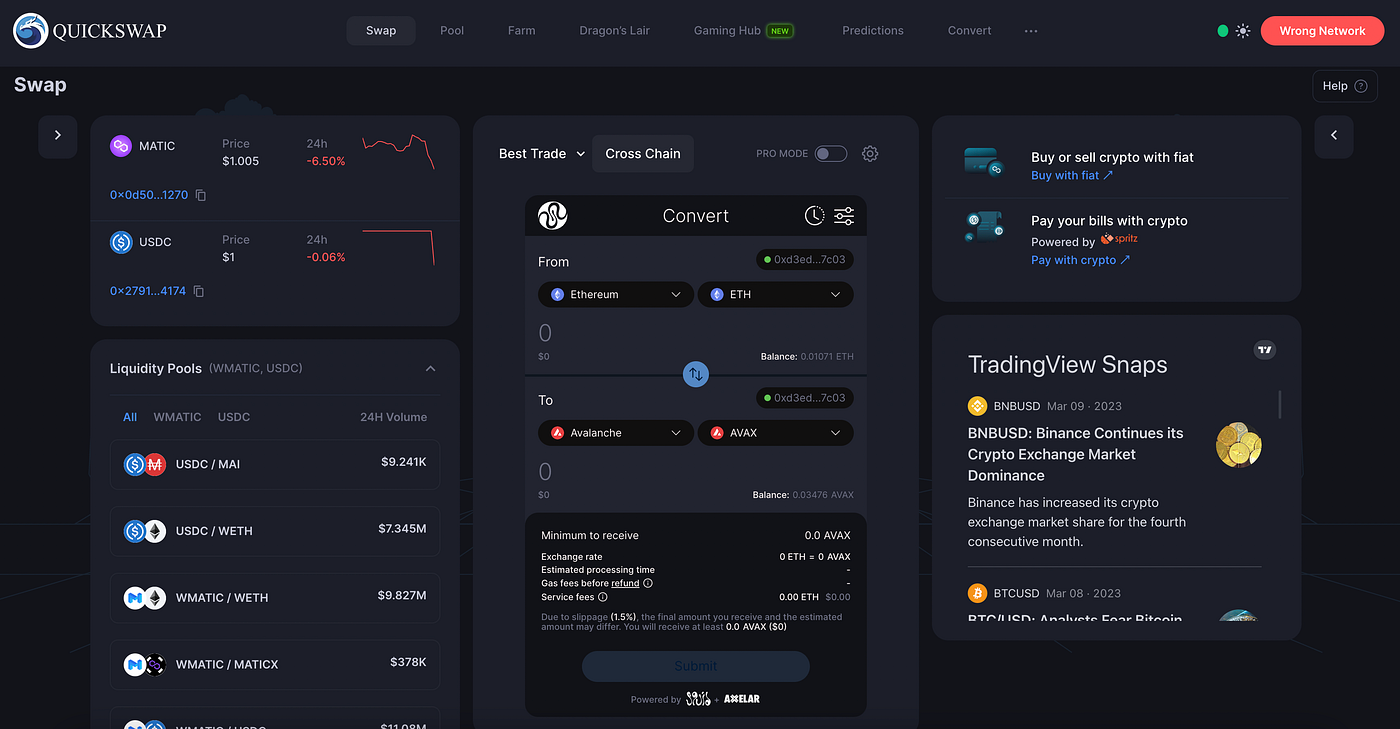
One-Click Execution: Describe your swap intent in routers like Rango Exchange; solvers execute seamlessly across chains.
Yet, it’s not flawless. Solver centralization risks loom if a few dominate auctions, though competition keeps it honest. Execution depends on network health – a congested L2 can delay even the best bid. Still, as Modular Media argues, solvers backbone chain abstraction by decentralizing fulfillment. Devcon SEA’s intent addresses take it meta: send funds to an address, trigger arbitrary actions across L2s. Wild potential for automated trading bots.
Scaling to L3s and Beyond
Chain abstraction routers aren’t stopping at L2s. As L3s proliferate – think modular rollups stacking on L2s – intents scale effortlessly. Unified UX across L2s and L3s means one wallet, one signature for nested ecosystems. 7blocklabs breaks down the flow: intents abstract multi-sig bridges into single clicks, vital for devs building omnichain dApps. I’ve eyed setups where L3 yields feed L2 liquidity pools via solvers, capturing arb-free swings.
[youtube_video: Tutorial on implementing intent-based cross-chain swaps with LI. FI or similar protocol]
For builders, start simple: integrate via SDKs from LI. FI or Rango, expose intents in your UI. Traders, hunt protocols with open solver networks – more bidders mean tighter spreads. Swing with the abstraction tide, as I always say: these tools align L2/L3 dynamics with your setups for optimal gains. The multichain maze? Solved, one intent at a time, paving frictionless DeFi where borders blur and opportunities flow.
About the Author